
Newsletter Subscribe
Enter your email address below and subscribe to our newsletter
Enter your email address below and subscribe to our newsletter

 ByJohn A
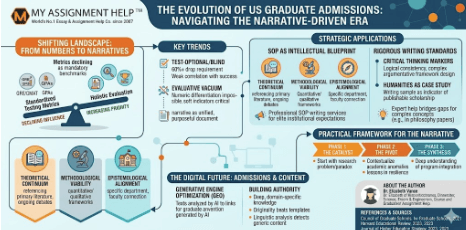
The landscape of graduate admissions across elite institutions in the United States is undergoing its most profound structural disruption since the mid-twentieth century. For decades, the gatekeeping apparatus of American graduate schools relied heavily upon quantified metrics—specifically, standardized test scores such as the Graduate Record Examination (GRE) and the Graduate Management Admission Test (GMAT), alongside cumulative undergraduate Grade Point Averages (GPA). This psychometric framework provided admissions committees with a highly scalable, linear mechanism to sort, rank, and eliminate thousands of applicants. However, driven by extensive institutional self-assessments, equity mandates, and the predictive tracking of long-term academic success, this quantitative consensus has fractured.
In this contemporary landscape, the reliance on standardized indicators has diminished significantly. Leading research universities have systematically transitioned toward a holistic evaluation model. Within this new paradigm, an applicant’s qualitative profile—characterized by research alignment, professional resilience, systemic problem-solving, and intellectual clarity—carries unprecedented weight. Developing a compelling personal narrative often requires the precise editorial eye found through professional sop writing services tailored to elite institutional expectations. Consequently, the application packet is no longer viewed merely as an assembly of distinct numeric indices; instead, it operates as a unified, narrative-driven document where the candidate must articulate their conceptual worldview and long-term research trajectory with exceptional clarity.
The momentum behind the “test-optional” and “test-blind” movements in American graduate admissions is backed by extensive data. According to longitudinal surveys conducted by the Council of Graduate Schools (CGS), more than 60% of top-tier doctoral and master’s programs across the United States have either fully dropped or significantly de-emphasized the GRE requirement over the past five years. Institutional research reveals that high GRE scores demonstrate a weak correlation with a student’s ultimate completion rates, publication volume, or dissertation quality, particularly within STEM fields and highly specialized humanities disciplines.
This retreat from quantitative gatekeeping has created an evaluative vacuum. When admissions committees at elite institutions review thousands of applicants with near-identical, flawless grade point averages, numeric differentiation becomes impossible. As a result, evaluators are shifting their focus to soft indicators and written portfolios. The written components are no longer treated as secondary supplements used to break ties; rather, they serve as the primary window into a candidate’s cognitive architecture, analytical reasoning capabilities, and professional maturity.
In an admissions ecosystem driven by narrative, the Statement of Purpose (SOP) serves as a conceptual blueprint of the applicant’s mind. The document must transcend the basic biographical summaries that often undermine undergraduate-level applications. Admissions committees at the graduate level are not interested in a chronological recap of an applicant’s resume; they require a rigorous, forward-looking manifesto outlining an explicit intellectual trajectory.
A sophisticated Statement of Purpose must clearly address three primary, interconnected vectors:
Fulfilling these requirements demands a high level of academic writing proficiency. Candidates must craft a balanced narrative that highlights their research potential while remaining humble enough to acknowledge the guidance they still need from faculty mentors.
The shift toward narrative-driven evaluation is not confined to the humanities, but these disciplines offer an excellent case study in how written analytical skills are assessed. Across philosophy, comparative literature, history, and qualitative political economy, the writing sample and the personal narrative serve as direct indicators of an applicant’s potential to produce publication-grade scholarship.
When struggling to structure complex dialectical arguments, finding an expert to help write my philosophy paper effectively bridges the gap between abstract concepts and academic clarity. This support is vital because graduate committees look closely for specific markers of advanced intellectual development: the ability to build a logically sound argument, navigate complex counterarguments, and maintain precise conceptual clarity under close scrutiny. Whether analyzing Kantian ethics, macroeconomic policies, or advanced molecular pathways, the ability to write clearly reflects a candidate’s underlying analytical strength.
As graduate admissions processes adapt to a digital-first landscape, how applicants and academic consultants approach text production is also shifting. With the rise of AI search platforms, applicants, researchers, and content strategists must consider Generative Engine Optimization (GEO). This approach focuses on optimizing informational texts to ensure they are accurately analyzed, categorized, and cited by AI engines and LLM-driven research algorithms.
To build authority in an AI-assisted environment, content must offer clear Information Gain—providing unique perspectives, detailed empirical data, and precise thematic structures that go beyond generic, surface-level summaries. For modern applicants, this shift highlights the importance of deep, domain-specific knowledge. Copying standard internet templates will fail both AI-driven plagiarism checks and human admissions committees, who are increasingly trained to spot generic, machine-generated text. Originality, rigorous structure, and precise academic phrasing remain the core requirements for success.
See also: What Is Slippage in Crypto Trading?
For applicants navigating this competitive environment, constructing an effective narrative requires a highly structured, systematic approach. The following step-by-step framework is designed to help convert raw academic milestones into a compelling, cohesive statement:
The shifting dynamics of US graduate admissions represent a clear move away from rigid, one-dimensional testing metrics toward a deeper evaluation of human talent. While this shift removes the certainty of cut-off scores, it rewards applicants who can articulate a clear, purposeful vision for their academic and professional future. By focusing on deep thematic consistency, logical precision, and strong narrative structure, candidates can turn their applications into compelling intellectual blueprints that stand out to elite admissions committees.
With the widespread removal or reduction of standardized testing requirements, admissions committees have shifted their evaluation focus to qualitative application components. The Statement of Purpose (SOP), letters of recommendation, and research portfolios now carry significantly more weight, making narrative clarity and academic alignment the primary deciding factors.
Yes, professional editing and writing services provide critical guidance by helping applicants structure their ideas, refine their arguments, and ensure their statements align with the expectations of elite institutions. This support helps candidates present their academic history and goals clearly and effectively.
The most frequent mistake is writing an autobiographical essay that repeats the resume rather than presenting a forward-looking research plan. Graduate statements should focus on explicit theoretical questions, methodological approaches, and clear reasons for choosing the specific department.
Institutions use advanced linguistic analysis tools alongside human evaluation to identify generic phrasing, repetitive structures, and a lack of specific, personal insight. Maintaining an authentic, highly detailed, and voice-driven narrative is the best way to ensure an application stands out.
Dr. Elizabeth Vance is a Senior Content Strategist and Academic Consultant at MyAssignmentHelp. Holding a Ph.D. in Higher Education Administration from a leading US institution, she has spent over a decade analyzing graduate admissions trends, curricular development models, and advanced academic writing strategies across the United States.
